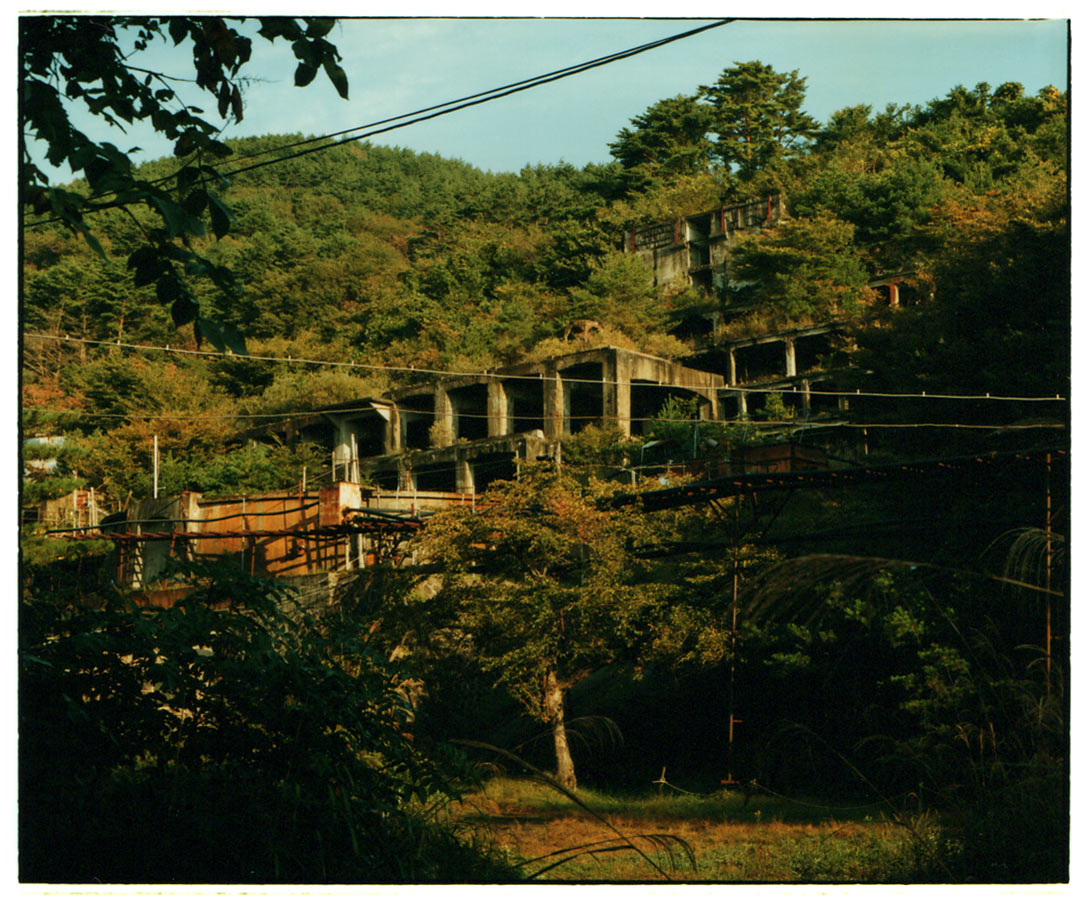
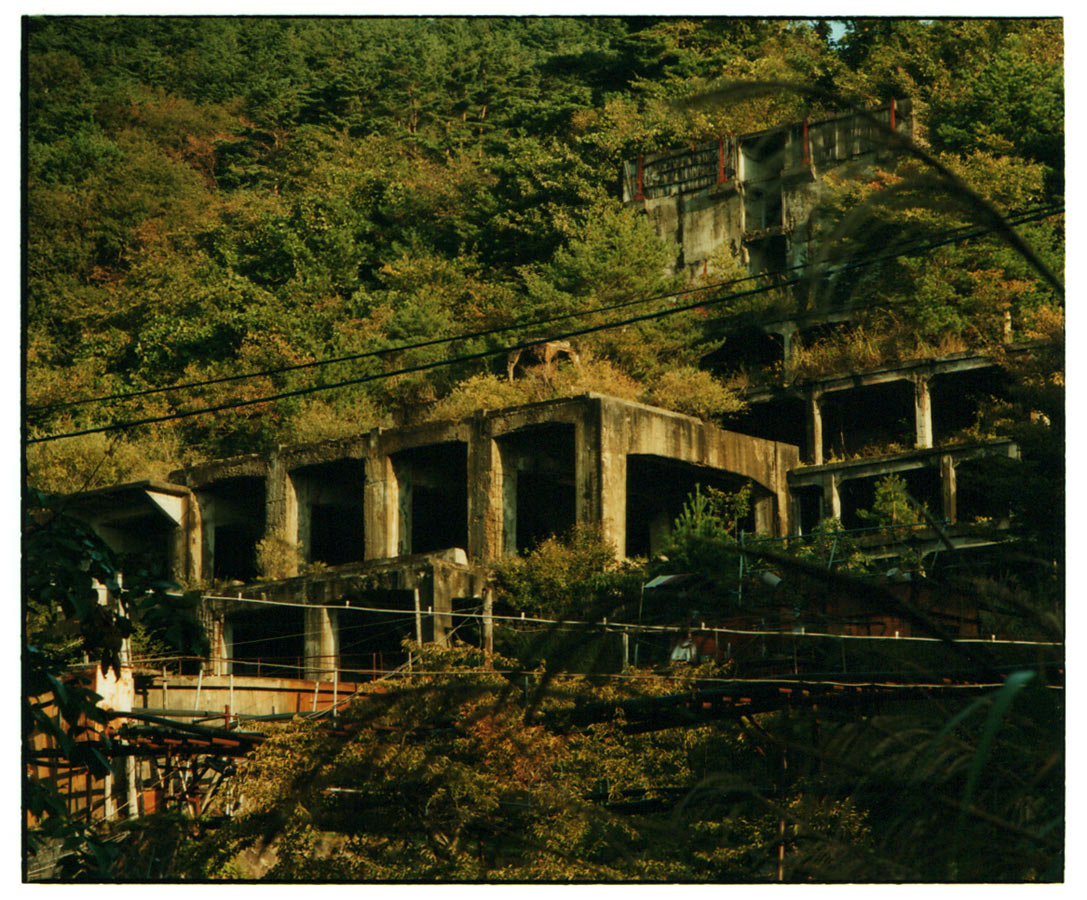
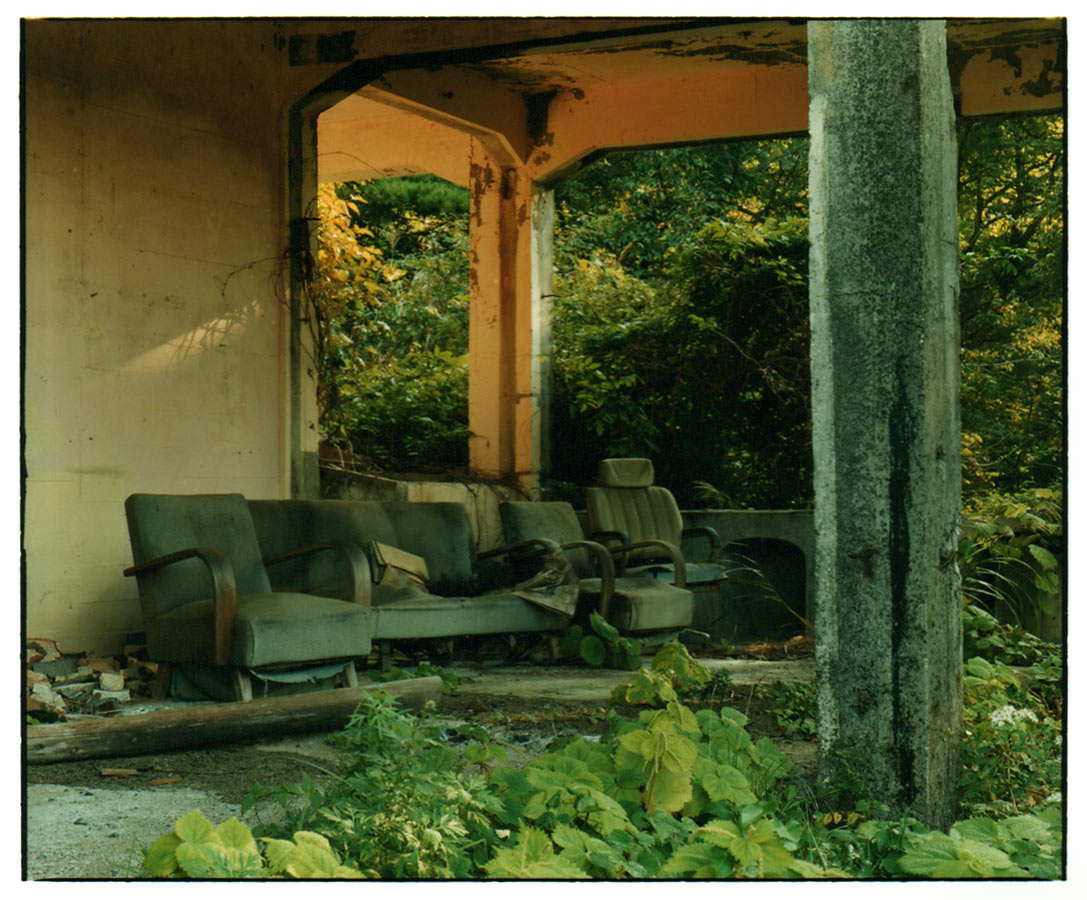
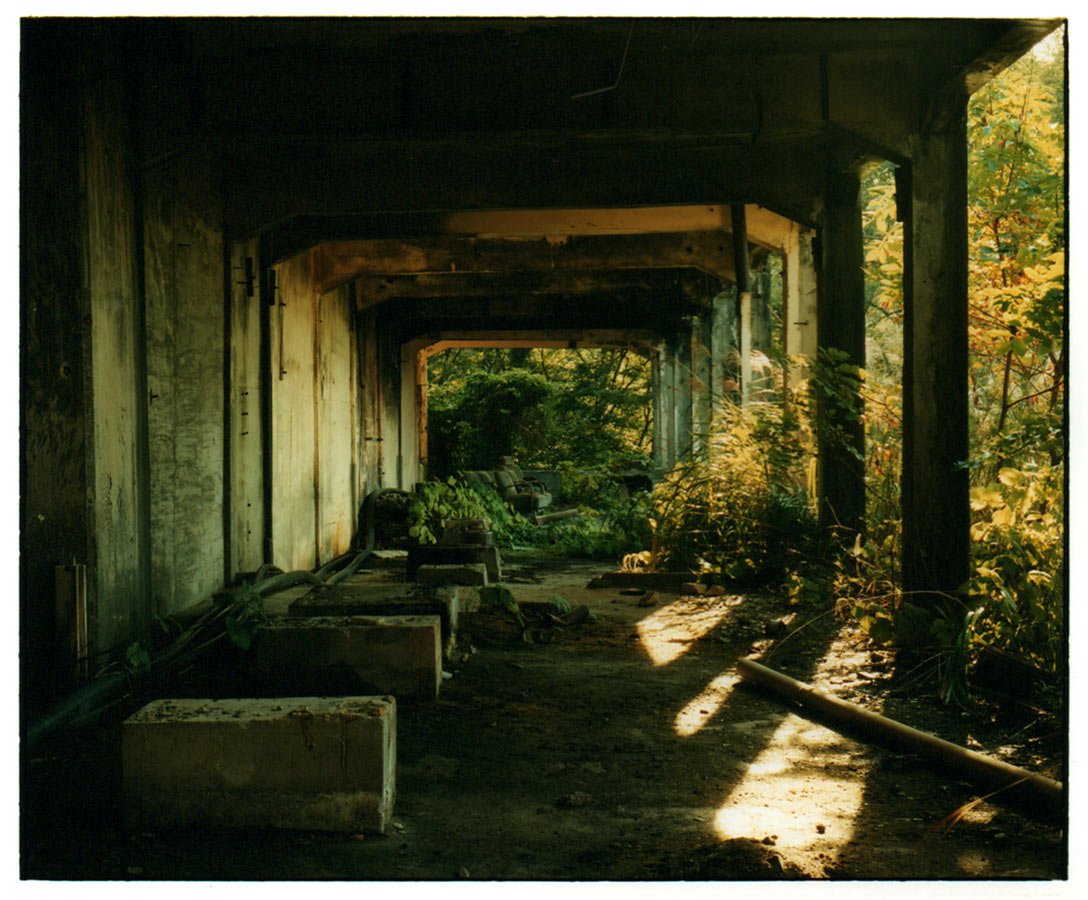
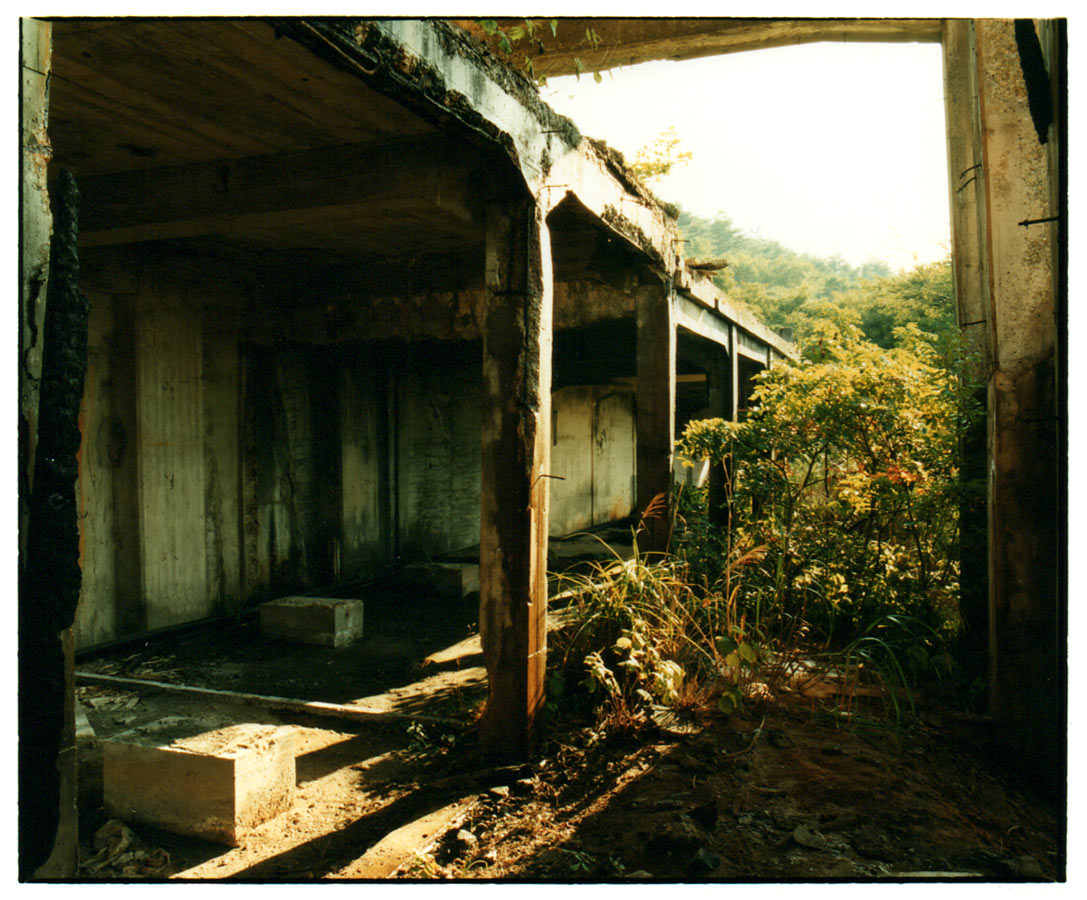
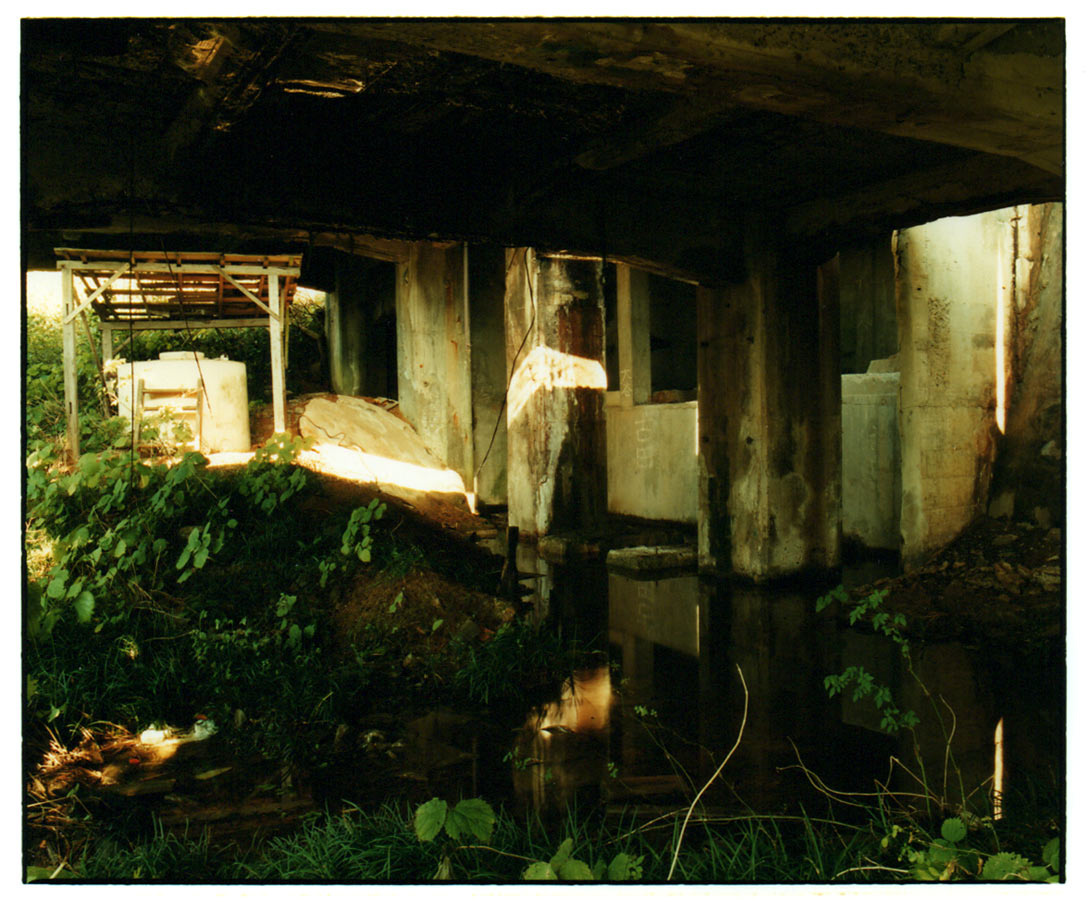
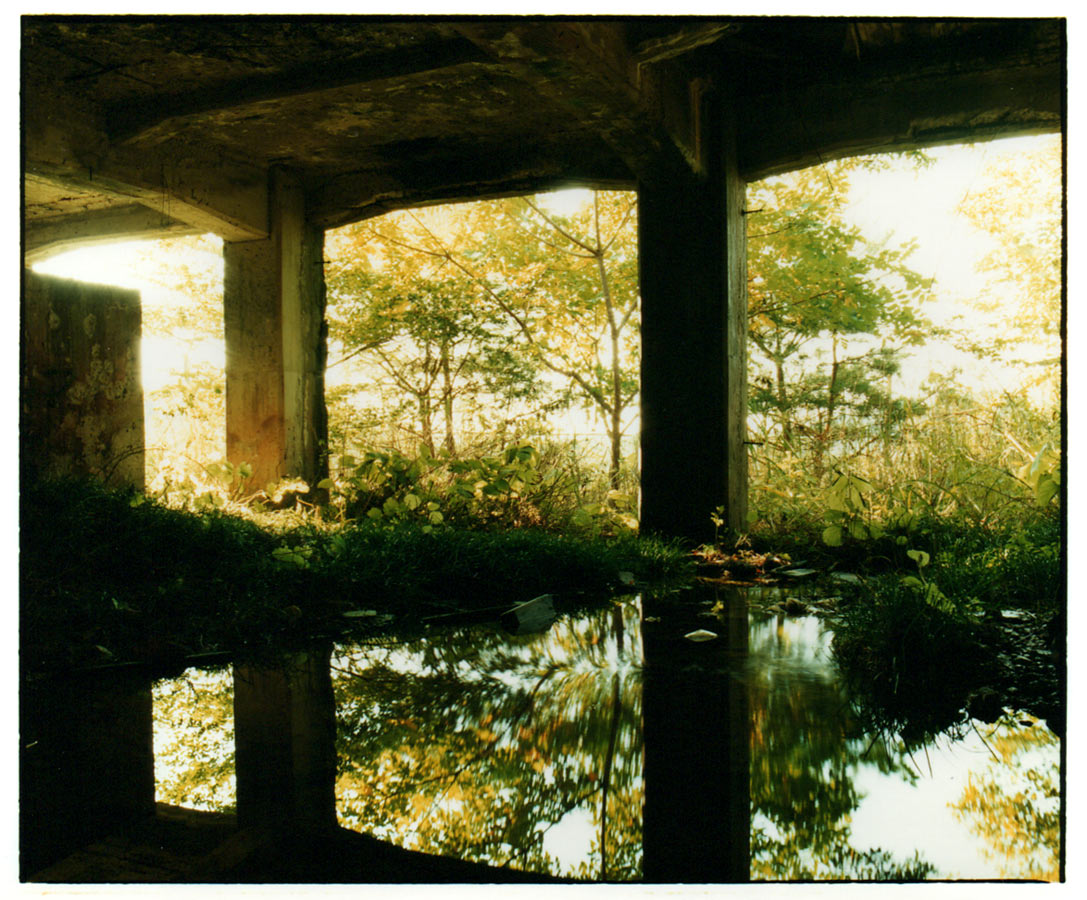
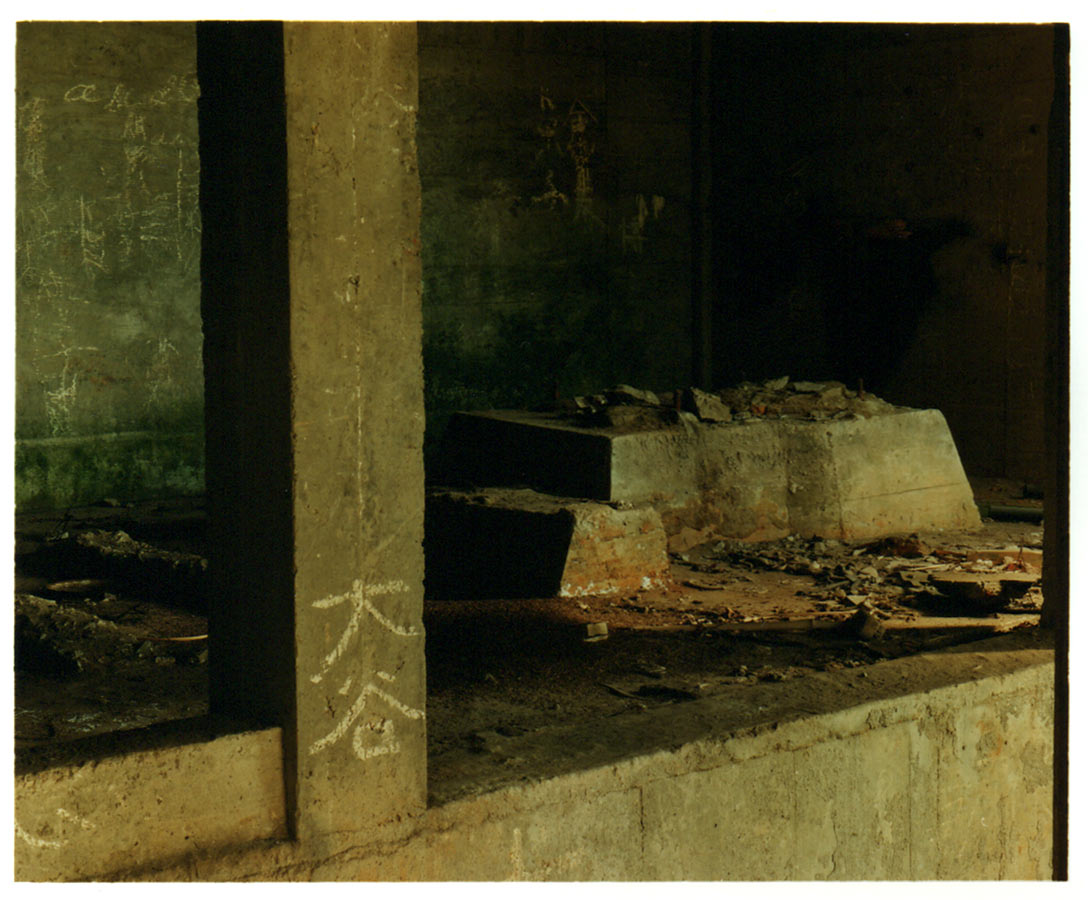
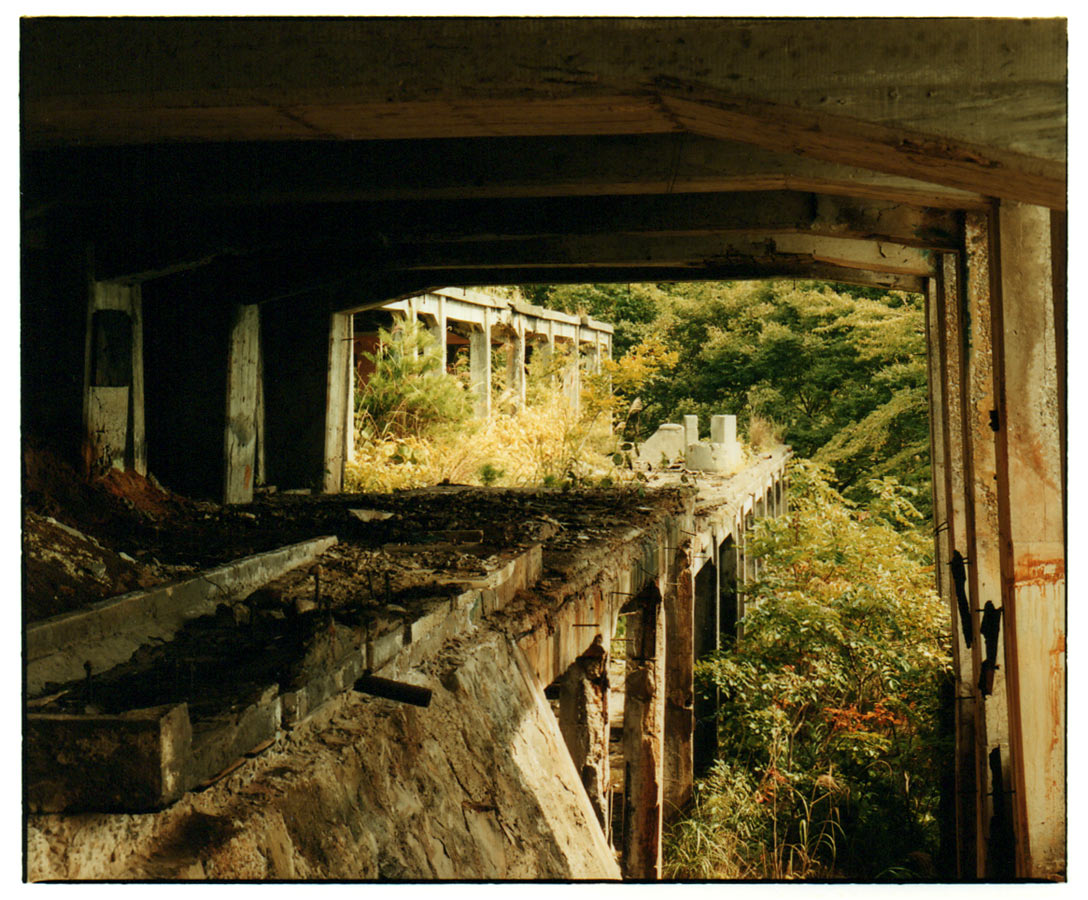
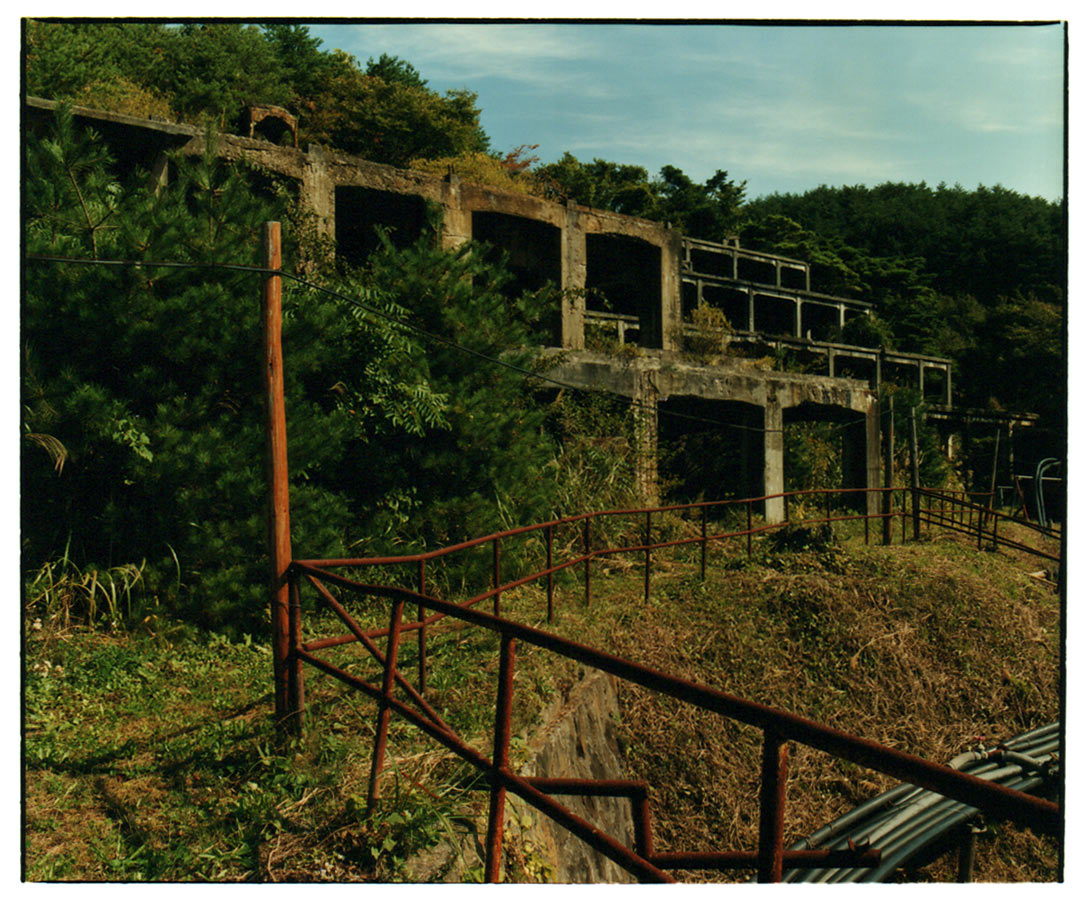
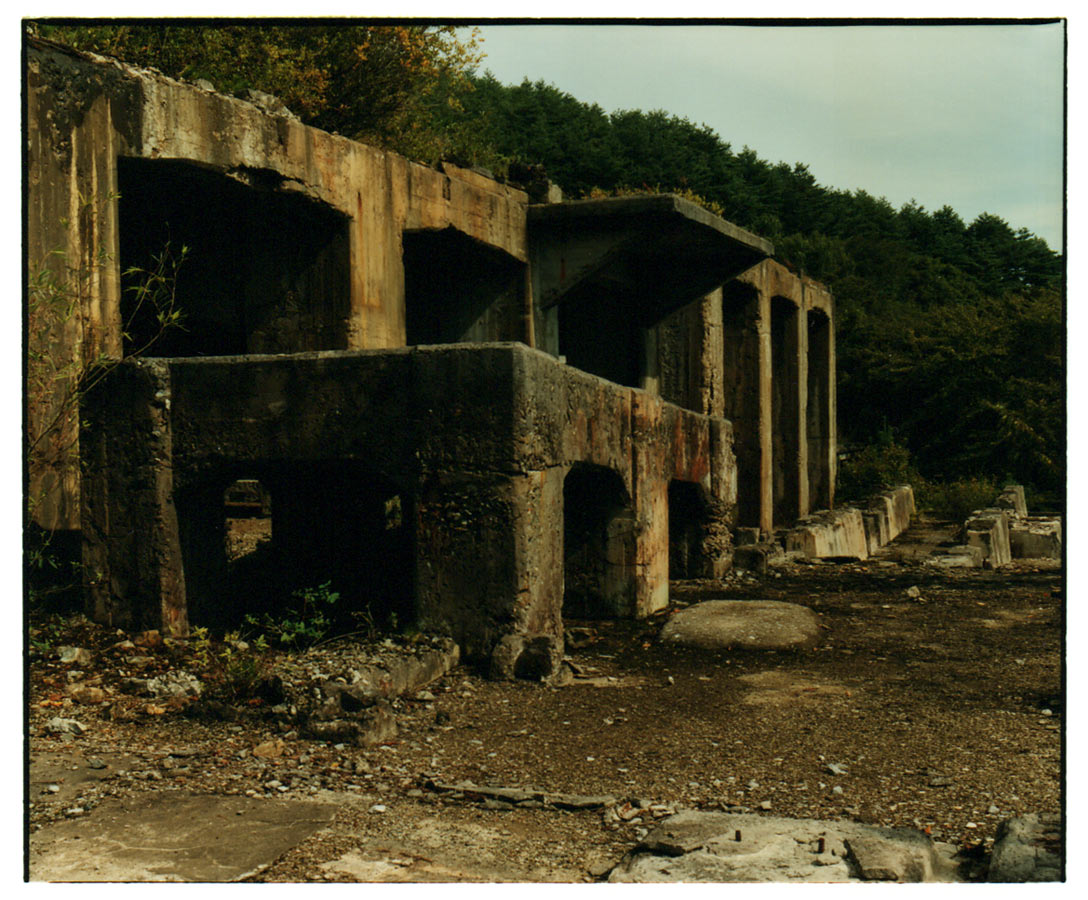
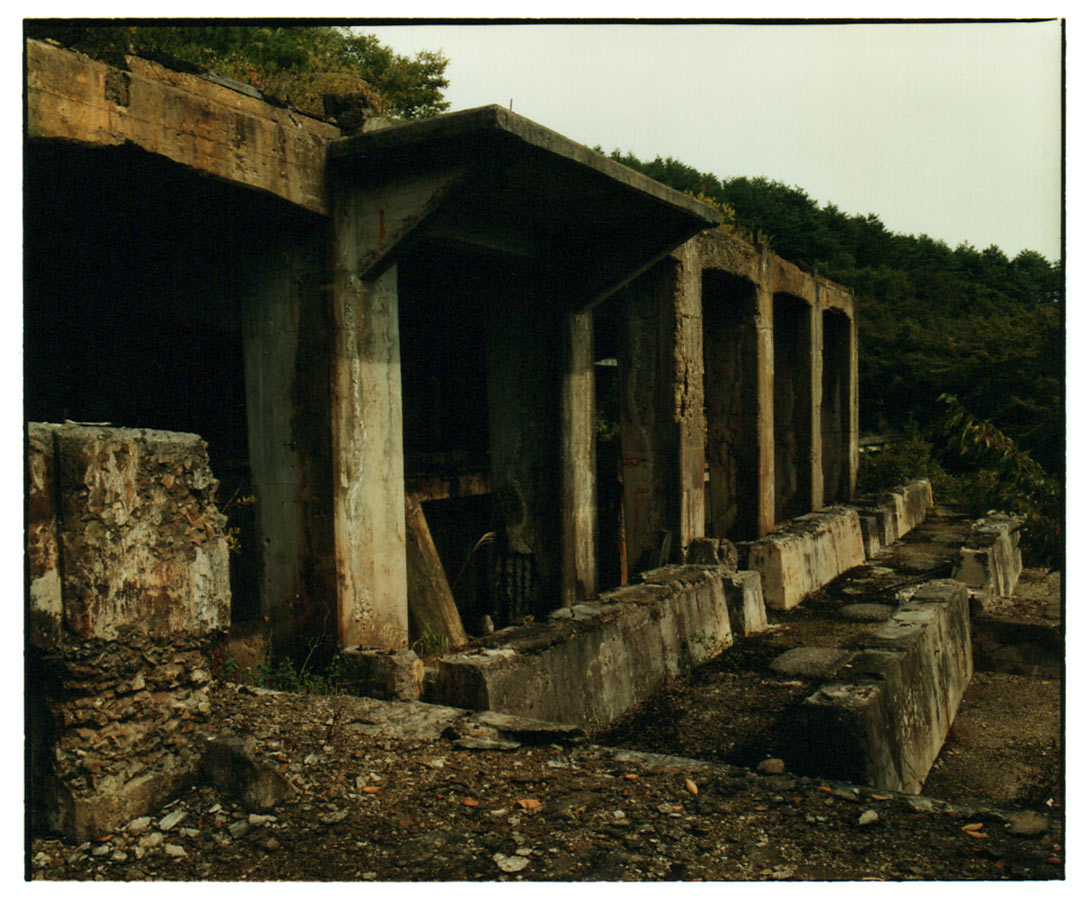
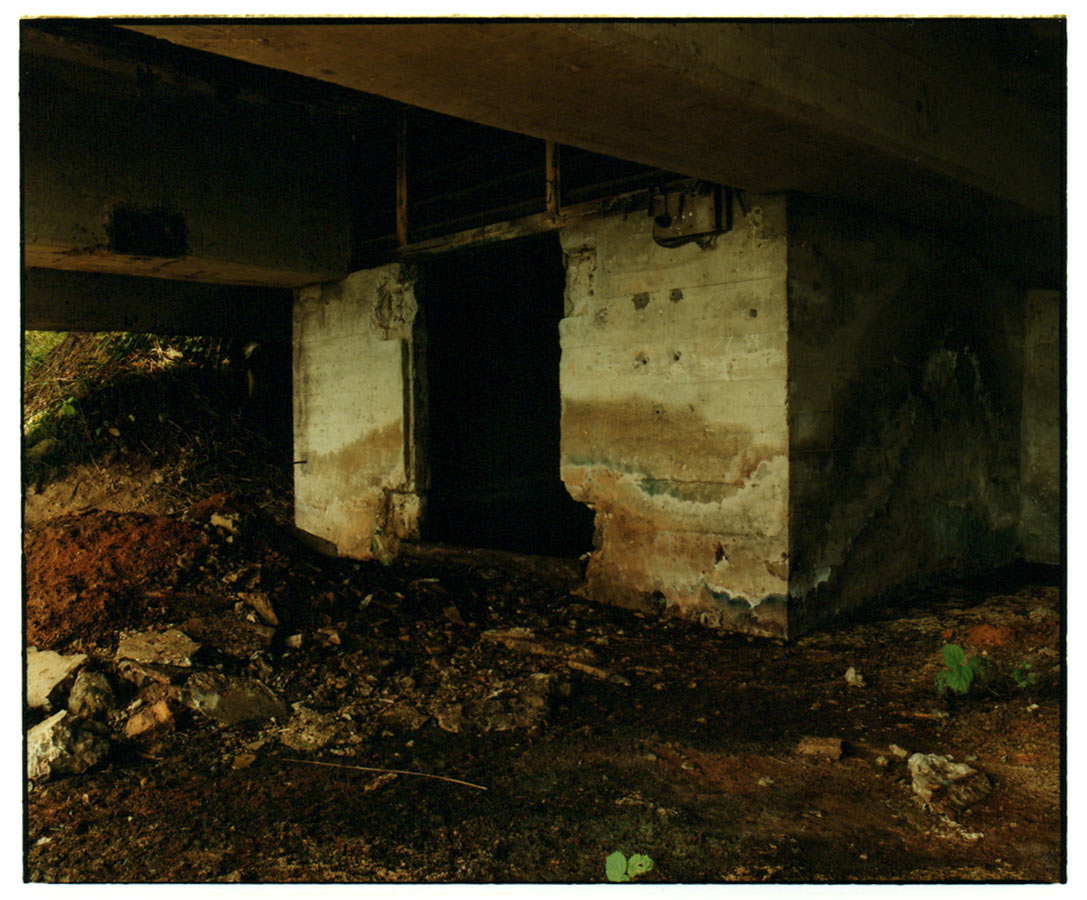
大谷鉱山跡
鉱床は大谷本坑、赤牛、岩尻、津谷の 4 鉱床群に大別され、戦後、操業は本坑鉱床群に集約されました。 本坑鉱床群は本坑をはじめ、長盛、一枚山などの鉱床から構成され、なかでも、鉱山事務所の北に広がる本坑鉱床では多くの鉱脈が集中し、本脈群と 5 号脈群の平均品位は金 60 g/t に及びました。 また、興北をはじめ、新館、新月、立石鉱山、岩手の矢越、東楽鉱山など、多くの鉱山が大谷鉱業所のもとで支山として稼行されました。 日本鉱業が単独経営を開始した 1929 年(昭和 4 年)以降、1966 年(昭和 41 年)までの生産量は金 15,394 kg、銀 4,779 kg に上り、同年の坑道総延長は 110 km に達しました。
1976 年閉山
Oya Mine
The ore deposits were broadly divided into four groups: Oya-Honko, Akaushi, Iwajiri, and Tsuya deposit groups, and in the postwar period, operations were concentrated at the Honko deposit group. The Honko deposit group included Honko, Chonomori, and Ichimaiyama deposits. Among them, the Honko deposit, extending north of the mine office, was the most important. It consisted of numerous ore veins, and the No. 1 and No. 5 ore vein groups averaged 60 g/t in gold. Furthermore, the Oya mining operations included several other mines, such as Kohoku, Niidate, Shingetsu, and Tateishi in the prefecture, as well as Yagoshi and Toraku in Iwate Prefecture. From the beginning of independent management by Nippon Mining Co., Ltd. in 1929 until 1966, Oya Mine produced 15,394 kilograms of contained gold and 4,779 kilograms of contained silver, and by 1966, the total length of underground workings reached 110 kilometers.
closure in 1976
宮城県気仙沼市本吉町高瀬ヶ森
金、銀
Takasegamori, Motoyoshi Town, Kesennuma City, Miyagi
gold, silver